
Zombies with Personalities
A Requiem for a Resident

I am once again breaking my usual posting pattern to tell you what I think about a video game, and once again, I justify it by saying that the issues of game design, with the primary and secondary loops, and all the matters of tone, difficulty, pacing, etc, lay a solid framework for examining practically any medium.

The latest Resident Evil is equally brilliant and infuriating, and all the brilliance is extremely frontloaded, which makes for an excellent first impression, and a fairly exhausting final one. It brings about one of the best innovations in the series history, then borrows desperately from RE4 and other, overall more successful installments.

(earlier Resident Evil coverage)
That pattern is common to almost all RE games, and the problem of sustaining tension and interest has always bothered me—why do they all stumble towards the end (with some notable exceptions)? I’ll try to outline these and other issues, and how I think they can be solved, similarly to the way I covered Elden Ring a while ago.

(earlier Elden Ring coverage)
PROBLEM 1: INVENTORY
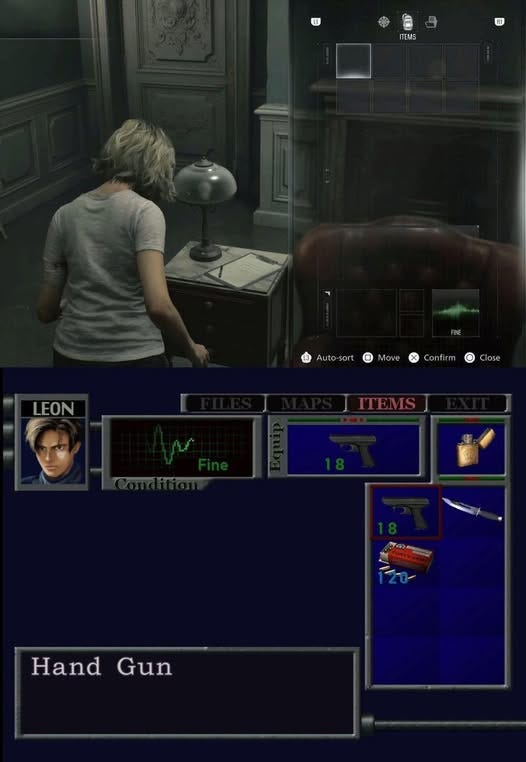
First of all, there is the obvious issue of growing inventory and upgrades, which doesn’t always fit with the premise of survival horror. These games should feel almost impossible, and the almost is the most important part. It can be easily manipulated, with adaptive difficulty and item placement, but these seem like rather cheap solutions, especially because they can be easily manipulated back.
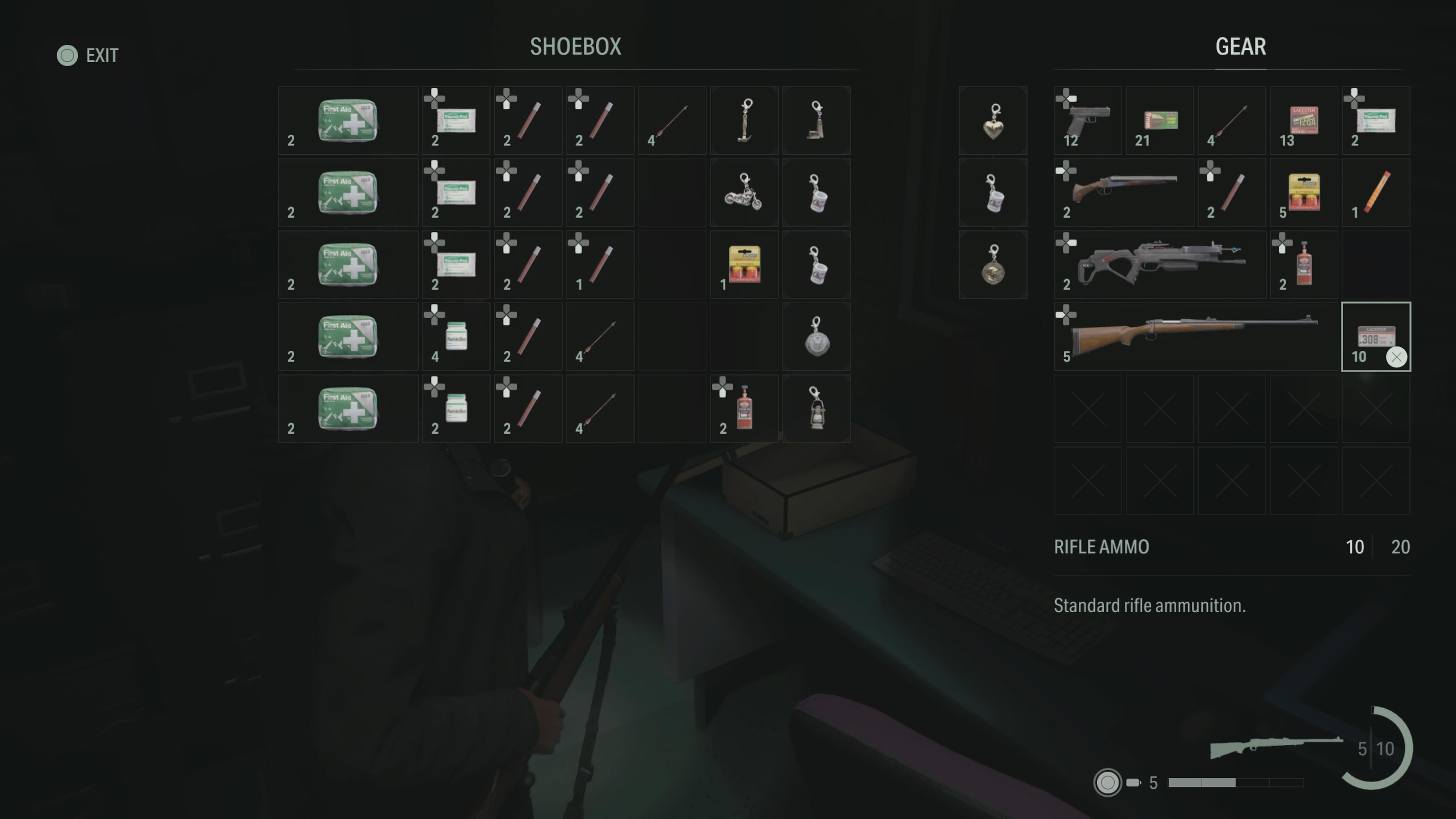
The most egregious example of this mechanic is in Alan Wake 2, where items in various boxes are generated in response to what you have in your inventory. Even if you don’t exploit this mechanic, it’s not great because the player isn’t trusted to overcome the problems, and is instead carefully nudged towards the right path. Plenty of modern AAA games have this misguided aspiration to act like an HBO show, and some of them even become that, which to me feels like the ultimate insult to the medium.
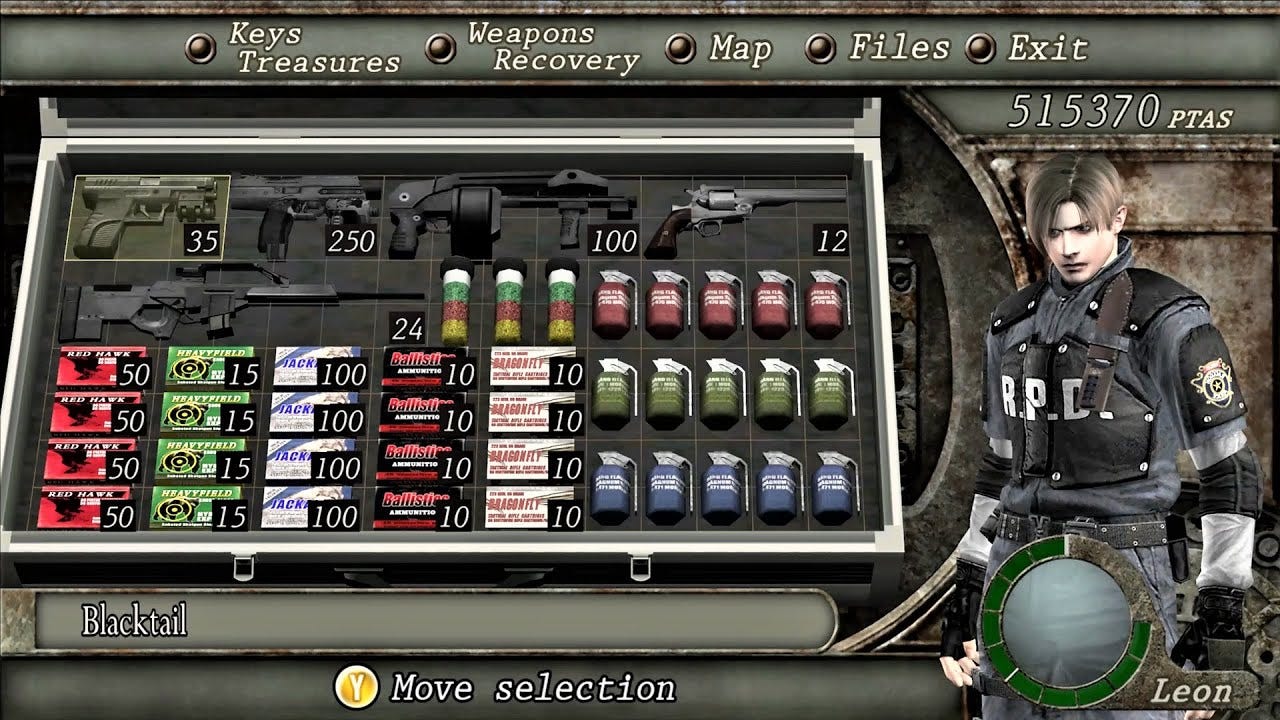
My solution would be to remove these magical storage containers altogether. Of course, this requires some adjustment to the inventory system, or the game becomes excruciating, since puzzle items take up space in the inventory, just like weapons. Personally, I’d either have a separate inventory for key items, or just let them exist outside of inventory restrictions. In my experience, if I spend some time wandering around and realize I don’t have some lockpick to some cabinet, the thought is rarely ‘ah, you got me, game! I should’ve planned better,’ but ‘damn it, now I have to do it all over again.’
Either way, it creates a very simple system of limiting how many resources you can carry. So, if you are very good at the game, and you use only 1/3rd of the resources scattered around a level, you still can’t take the other 2/3rd into the next area, making you overpowered, and so you have to make decisions as to what must be left behind, all in all adding to the survival elemt. It’s a simple solution, but it’s better than what we have, where, unless you play on the highest difficulties (and even then, sometimes) you end up with a huge amount of unused stuff if you do a half-decent job of exploring.
INTERMISSION
I have my last film (from two years ago, sigh) screening in Wales, and I put together a little remix from the assets, which made me want to go back to Blender immediately.
Also, if you are getting sick of video game talk, my last comics post (it’s good):

And lastly, I made an album cover, based on one of my 2020 loops. Somehow, it’s my very first record cover!

PROBLEM 2: MAP/TIME/SPACE
The biggest challenge to horror in these games, in my opinion, is the inventory/map that pauses the game. They removed the inventory pause in RE7, and immediately brought it back in the next installment, which I think was a huge mistake.
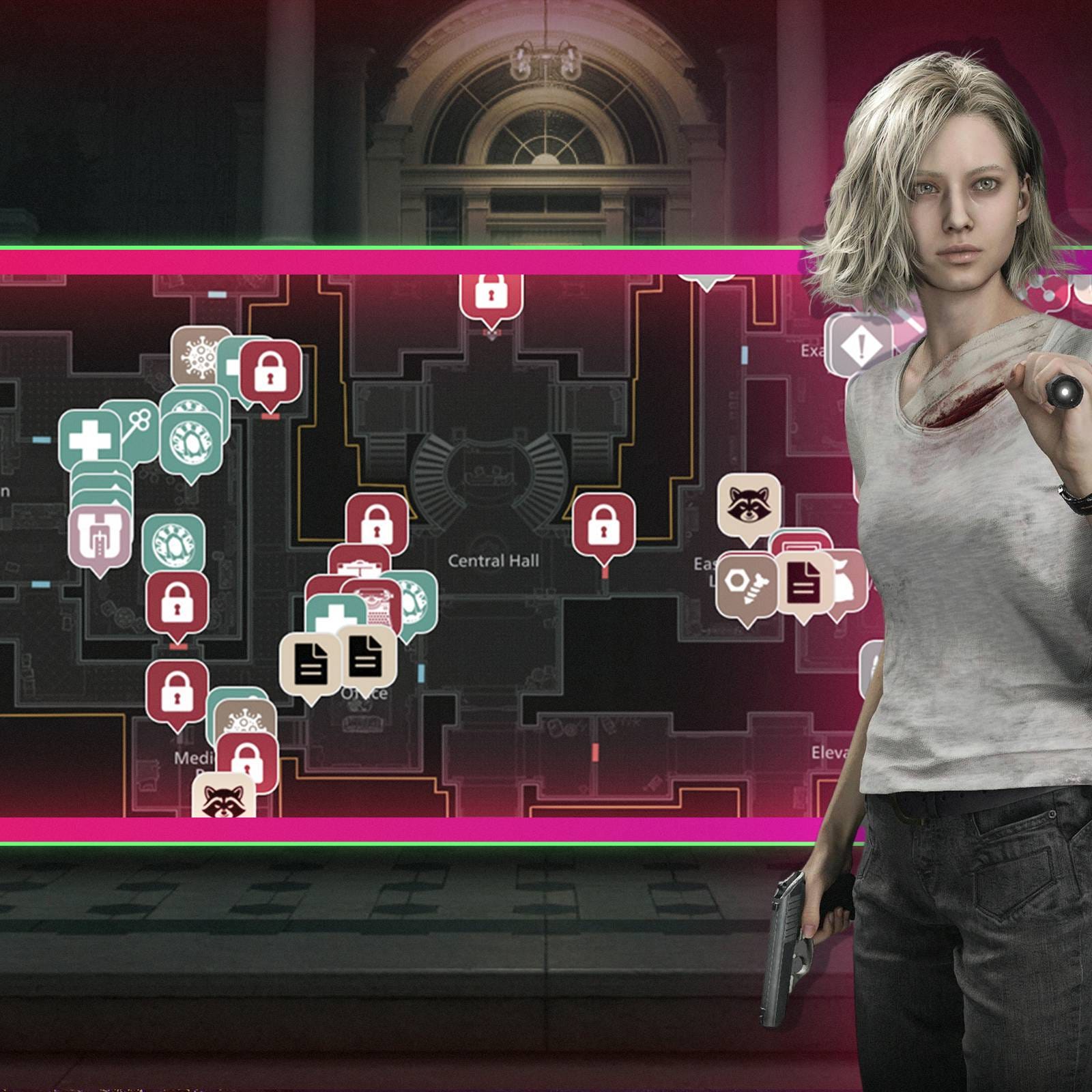
This is very much one of the things that made Bloodborne and Dark Souls often feel like survival horror games—you couldn’t just pause and think about the best item or weapon to use, and most importantly, you couldn’t take a break from running around zombies in a spooky mansion to check the map, where you’d see not only all the doors and passages, but even the unpicked items and points of interest.
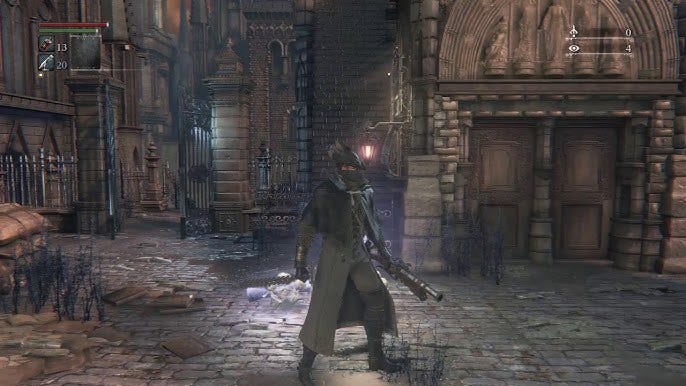
Starting any new RE game it always strikes me how fun it still is to be tossed into a big strange house, and try to figure out a way around it, with all the very video-gamey doors and puzzles. The map detracts from this experience a great deal, especially in tense moments, when you’re supposed to be making snap decisions. Sure, you can force yourself to be immersed and just not use it as often, but again, when there’s a temptation to locate the quickest route on the map, it’s hard to ignore it.
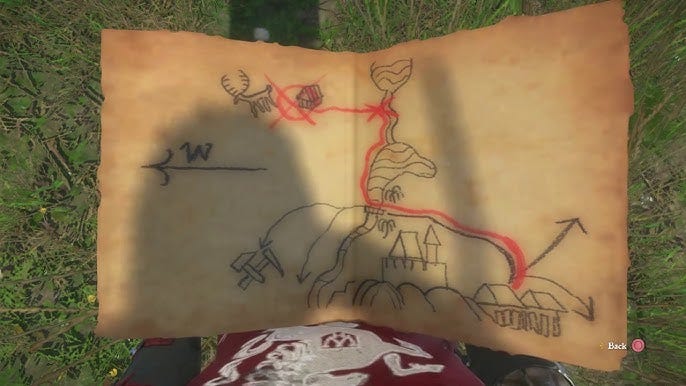
A simple solution is making the map an in-game object. You can pull it out when zombies are around, but you probably wouldn’t want to. On easier difficulties, you can have the character point out your location with a finger, or have it displayed if the map is some sort of iPad. On harder difficulties, it would be just an image to consult.
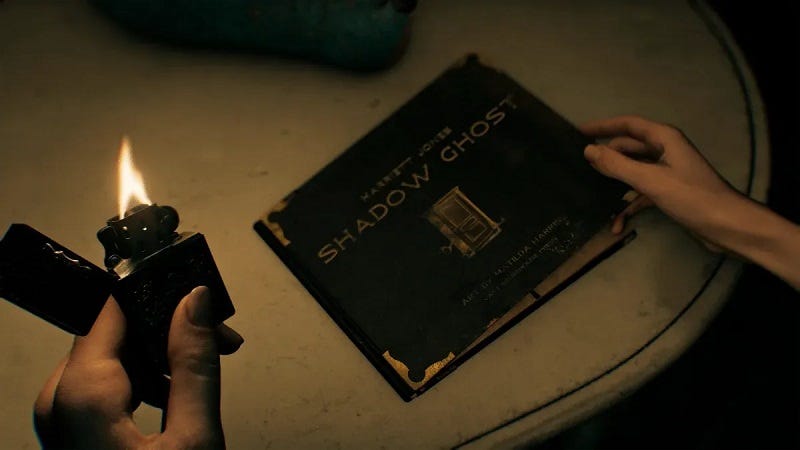
As added tension, you’d need a light source to see it, which would make the horrifying basement in RE7 even more horrifying. Compare it to the basement in RE9—mechanically, it’s far more complex and well-realized, and even the classic ‘collect three fuses’ puzzle is nicely paced and presented with a few minor twists. Now, imagine how much scarier it would be if instead of pulling out the map at any moment, you were pressed to plan out a route in the safe room, and try to keep it in your memory as you navigate the place. Hollow Knight introduced the brilliant mechanic of finding a portion of the map, and only expanding it when you rest at your save point. Not only does it make the exploration of the world feel far more immersive, it adds another incentive to survive.
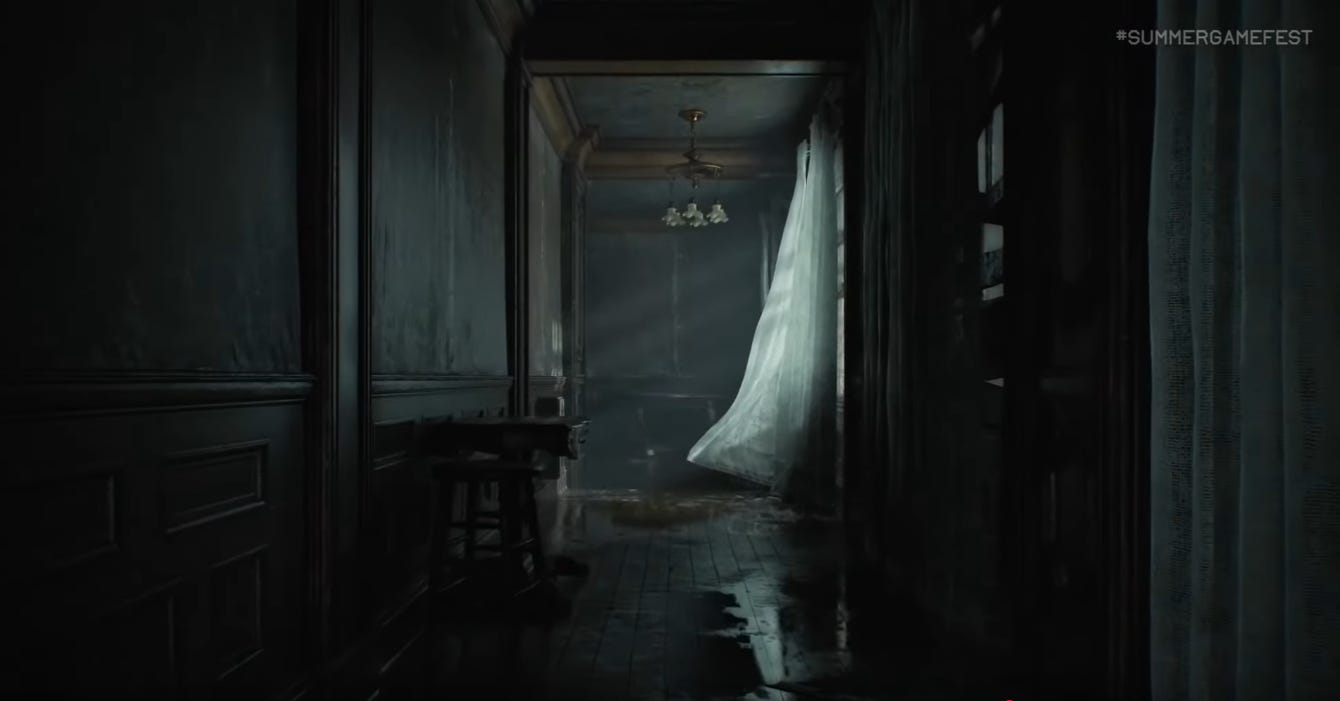
REQUIEM REVISITED
Now, let’s go through the actual game, and from this point on, there will be light spoilers. RE9 starts pretty well with a simple walking simulator sequence that has enough atmosphere to carry you through, though it probably wouldn’t hurt for it to feel a bit more engaged. Then we have a very brief little bout of Leon rushing through the street, which once again, teases us with what RE could’ve been. The opening area of RE3 is one another tease—for a minute, the town feels alive, and the horror urgent, and of course it ends too soon, and tosses you into the usual sequence of sewers and basements. I’ve only played the remake, which dumbed things down as much as possible, but apparently the original had branching paths and semi-randomized items and encounters, back in 1999. Not only did these ideas not develop along with the visual fidelity, most of them got abandoned altogether, along with the static cameras that did that classic thing of turning a hardware limitation into an artistic trick.
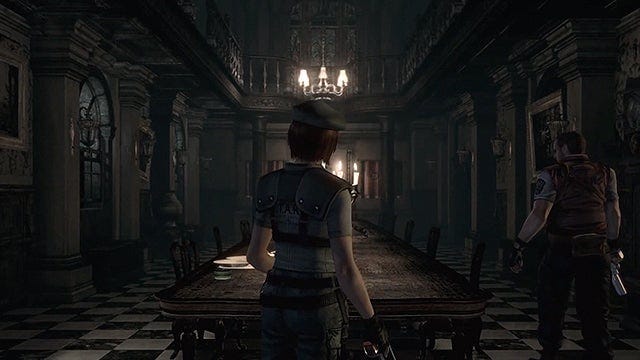
RE1 remake still looks incredible with its pre-rendered backgrounds, and while the current tech is more-or-less capable of rendering this kind of fidelity in real time, it’s clear that constraints gave original RE so much of its identity, from slowly opening doors in first person (floating in the void, which makes them doubly off-putting), to camera tricks, like the brilliant mirror room in RE1 that has to be experienced. With all these constraints gone, creativity has plummeted as well, and games (and all media, frankly) became increasingly samey and safe. Thing is, we can still have semi-fixed cameras when it makes sense. In the more action-ey sequences these fixed angles added little to the horror, and just made the game annoying, but now we could potentially let the camera follow the character with slight adjustments in placement, allowing it to linger here and there, and cut between shots for a dramatic effect.
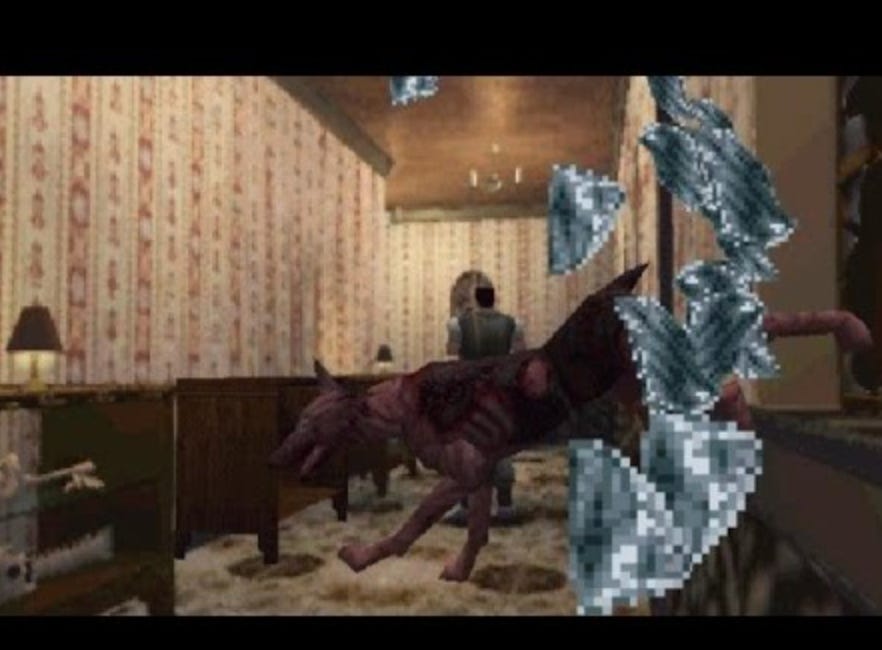
For one, the camera can be lower than it often is. Placing it above the character, or at shoulder level gives the viewer a sense of detachment, and a bit of a vantage point. Then there’s the issue of peeking behind walls, which the character shouldn’t be able to do. That can also be fixed by simply limiting how far you can rotate the camera in a corridor. I even think that tank controls can be given a second chance, with modern gamepads, but I doubt anyone outside retro indie studios would be willing to test the player’s patience this way.
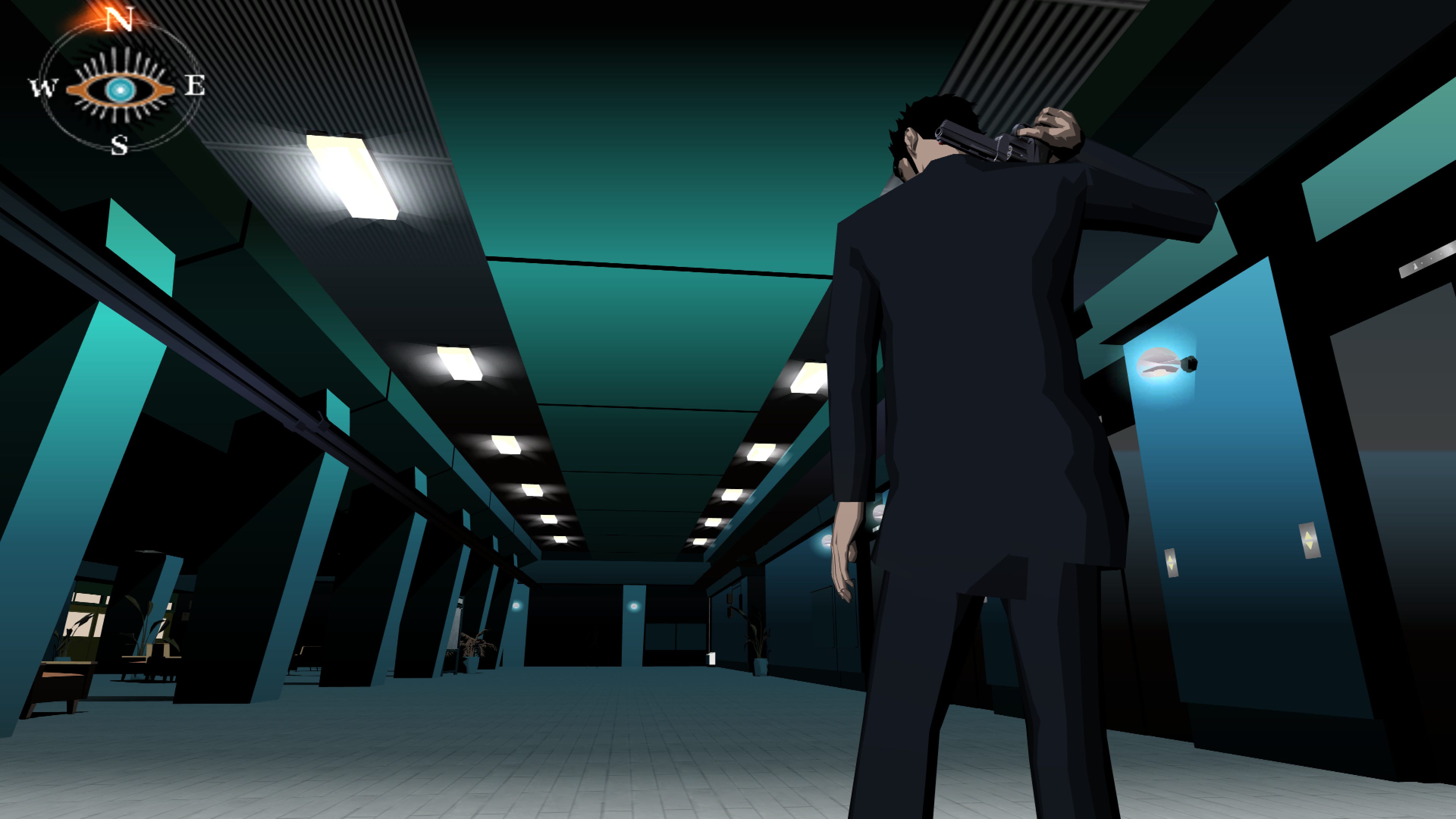
Killer 7 used the semi-fixed perspective to great effect by simply limiting the movements to forwards and backwards, with occasional choice of direction at various forks in the road. This was odd and old-fashioned for its time, but now it feels like a brilliantly bold and appropriate decision. Since then, Suda 51, the game’s director, went on to make a series of over-the-shoulder games, and all of them feel lost without that fixed camera. It can also be a great resource-saving measure. If you have a chase sequence, why bother spending hours on modeling an environment that you’ll simply run through. Instead, you can just not show half of it, and focus on perfecting that other half, and direct extra time and attention to areas that you explore freely at your own pace.
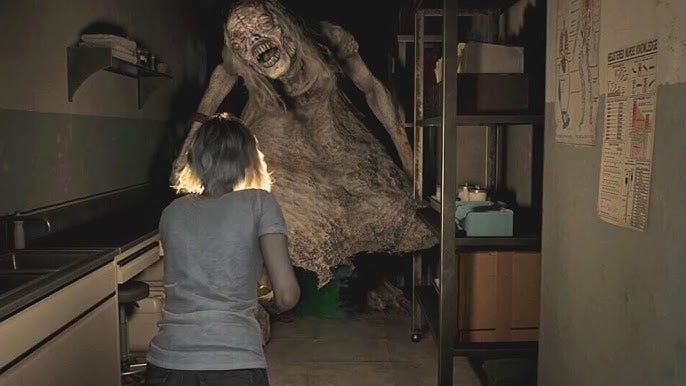
But back to Requiem. Grace wakes up briefly upside down, and them we are introduced to the terrifying first stalker, referred to as ‘the Girl.’ Mechanically, it’s all pretty simple, but the sequence is short and nicely staged, and acts as a solid tutorial. This is where I can’t help but imagine the same small area developed a bit more, with just a few more patterns of behavior, and ways of dealing with them.
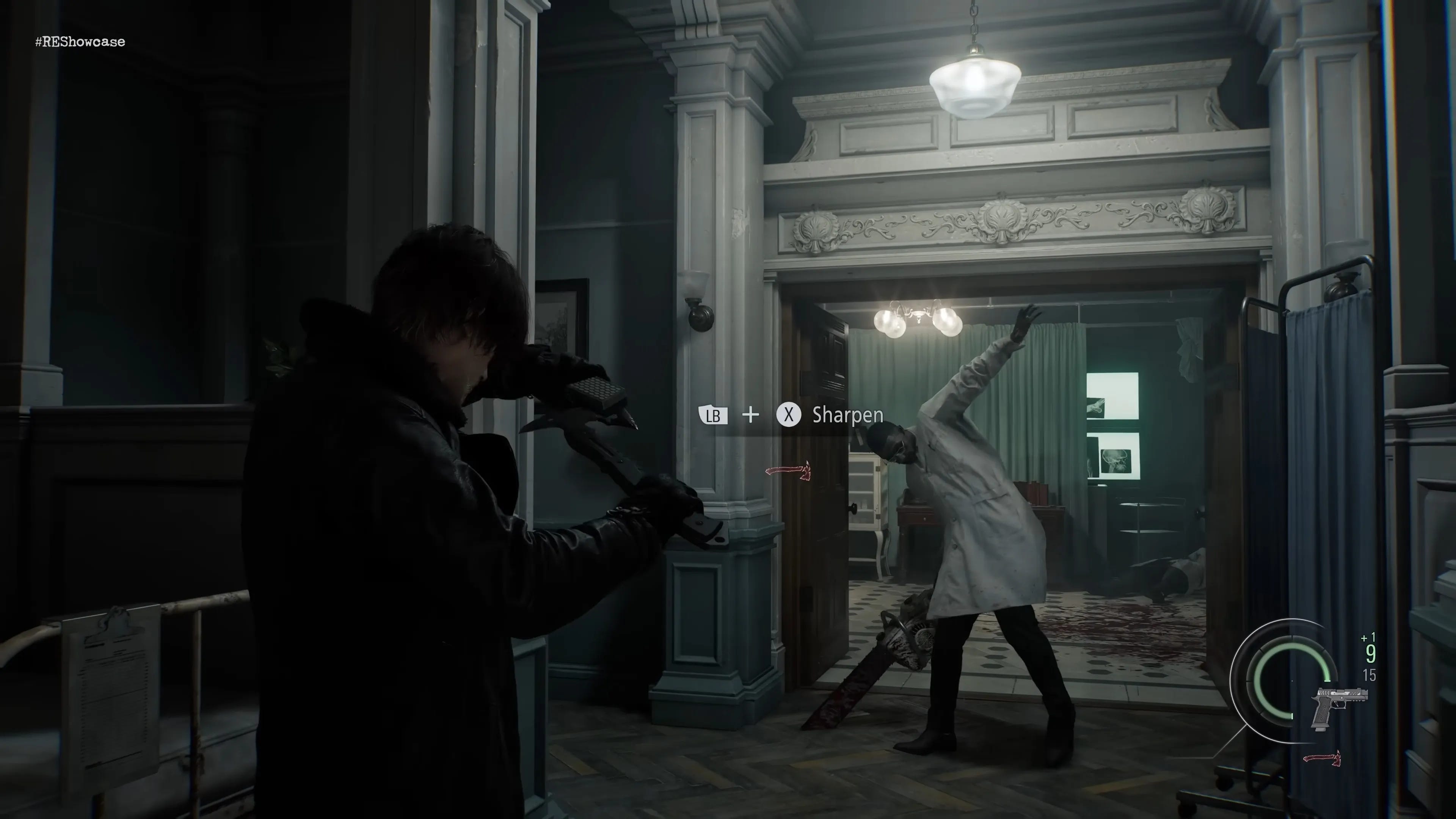
As we get away from the Girl, Leon comes to the hospital, armed with wisecracks, and a pistol. We get introduced to the chainsaw zombie, and here I must be a bore and ask: why is there a chainsaw in a hospital? And why is a doctor zombie wielding it? I know, the answer is because it’s sick, and it’s a video game, but still, I would’ve preferred it to be some kind of surgical drill or a surgeon’s saw. The whole chainsaw mechanic is pretty disappointing mechanically—it sounds good in theory, but in practice it’s a lot of busywork, keeping the zombies away from the chainsaw while it’s spinning on the ground, so that Leon can eventually grab it and do a few flamboyant slow swings, before lodging it in some zombie to return the thing to the zombies, who have no trouble picking it off the floor even while it’s actively spinning (makes sense gameplay-wise, but still, come on, let them get at least somewhat hurt in the process, otherwise it seems like the very clumsy zombies are somehow preternaturally adept at handing spinning chainsaws). Once again, the sequence is over far too soon, but don’t worry, we’ll get to spend more time with Leon… so much more that you’ll miss these short introductory areas, trust me.
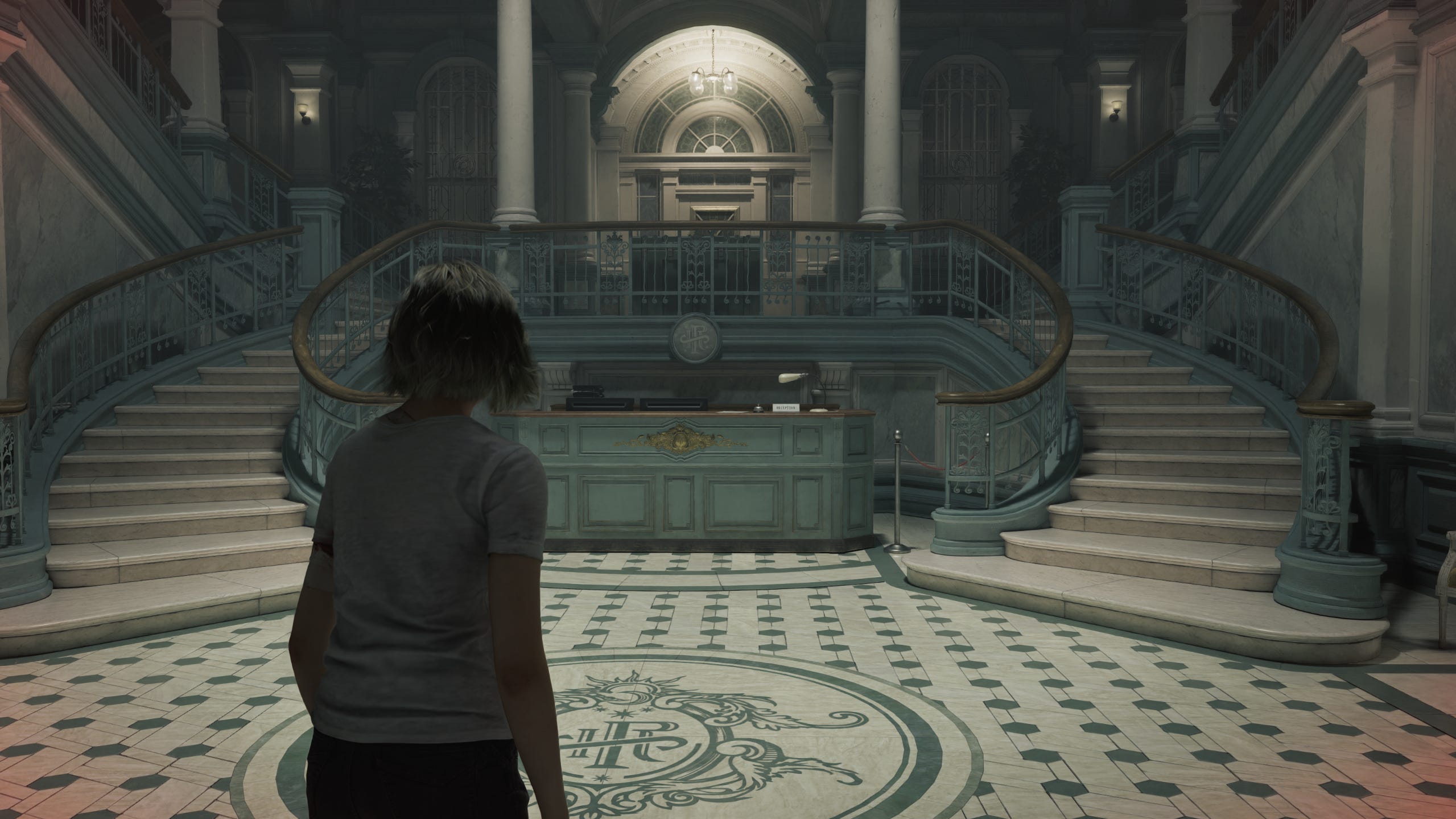
But now, the main part of the game begins, with Grace exploring the big spooky mansion. Undeniably, this is the peak RE experience—the environment is rich with atmosphere, the tension is slowly building, and the attention to detail is incredible. And then the zombies—they now have personalities! Some of them are obsessed with light switches, others are stuck in their occupational loops, chopping up meat or cleaning the bathroom (with blood instead of Windolene).
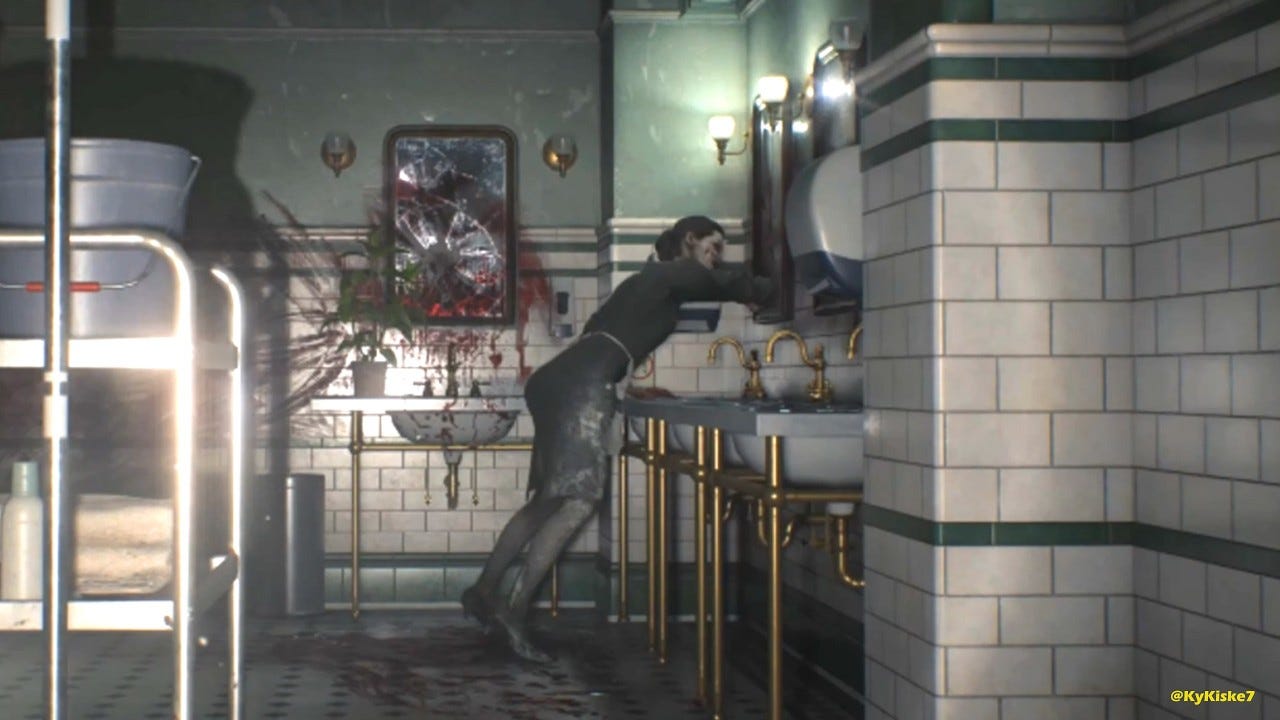
This is the best innovation RE has seen in a while, and I wish they focused on these semi-unique zombies and expanded their behaviors into systems that could interact with each other. There is a glimpse of that (you can set the noise-sensitive IV-drip zombies to attack the others), but it could’ve been so much more. Imagine some of them having a name that’s alluded to here and there, dropping personal items, keys to their rooms, little backstories. That is a lot of work, but so much effort has been put into the far less interesting stuff that is to come, while the most innovative parts are left half-baked.
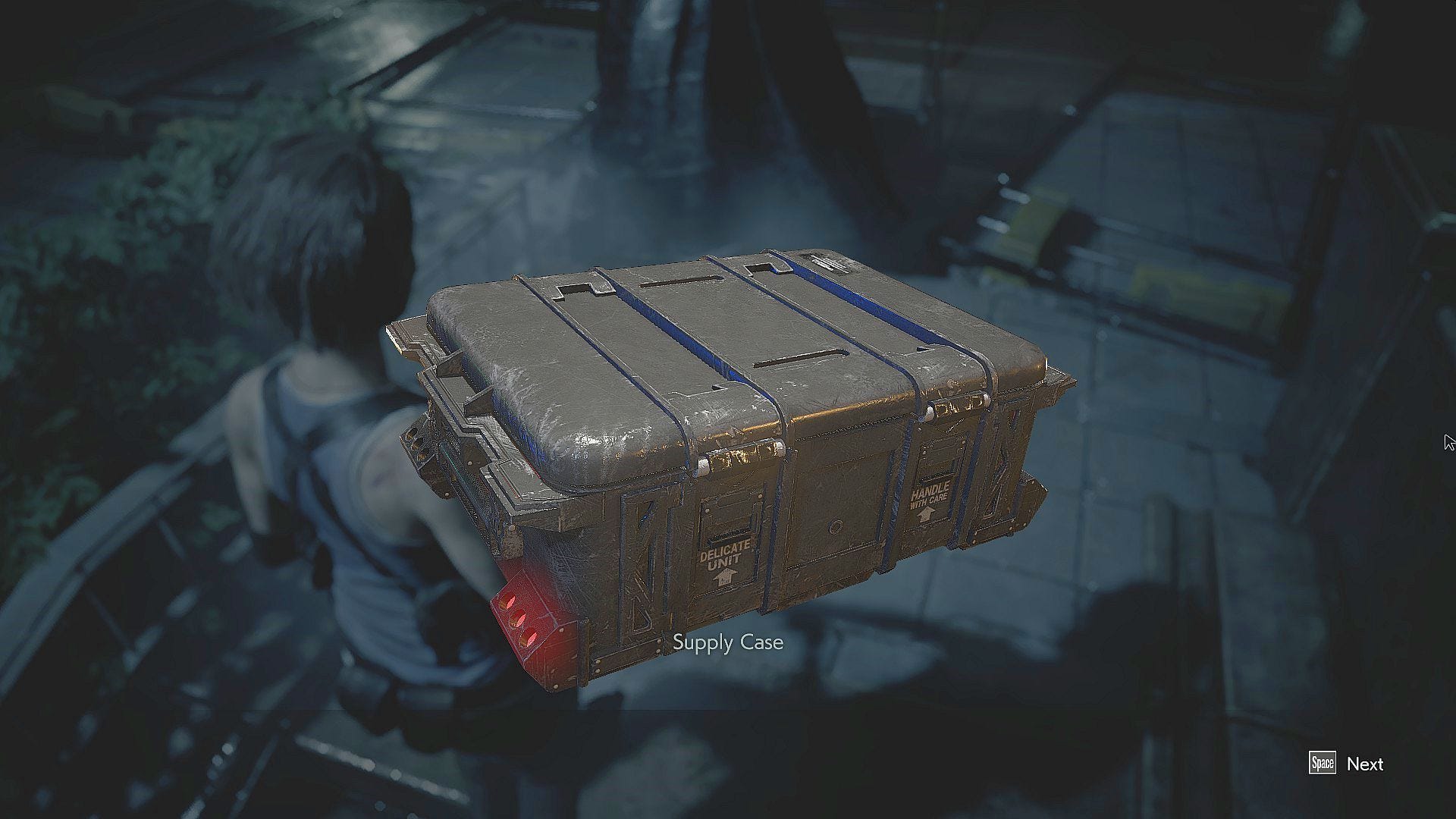
The puzzles in this section are… fine. Well, no, they are incredibly simplistic, but that’s what we must expect from modern games. There’s still something satisfying in the process, partly thanks to Capcom’s charmingly clunky UI animations. Still, why couldn’t these puzzles evolve along with combat and other aspects of the game? Instead, they are pretty much stuck in time, and often, the doors and locks of the very first iterations of RE are more demanding (admittedly, often more annoying as well).
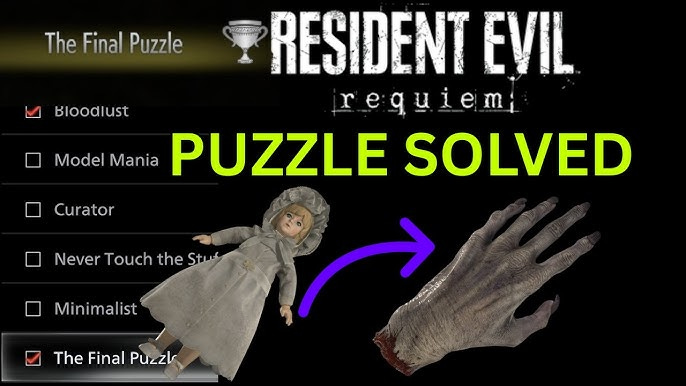
The game has an absurdly convoluted secret puzzle, clearly intended to create internet lore in the manner of Kojima’s PT, and sure, let’s have it, but then this is the range of puzzle complexity: either press three buttons to open door, or do this ridiculous sequence of events to get some hidden message from the developers.
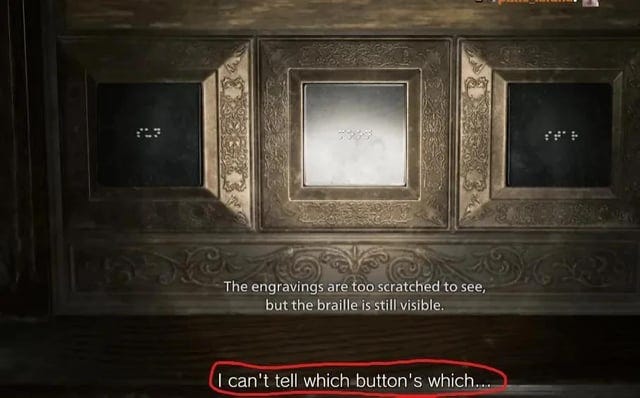
Perhaps the dumbest puzzle comes towards the end, when our protagonist has to smuggle a blind girl through corridors full of zombies, so she can input a 4-symbol code. The code is marked on similar machines with symbols of sun, moon, and star, each one with a braille underneath it. The machine, however, has the images on the buttons worn off (but not the braille, somehow), so that’s why we need to drag the girl here. Of course, since we have solved TWO of these puzzles before, Grace could just write down or memorize what the codes for the symbols look like, or even brute-force it, which would probably take around 10 minutes… The intended solution is so stupid that I kind of love it, as it plays right into the B-movie origins of the RE series. Was it intentionally dumb? Who knows—it goes beyond plain stupid into absurdly stupid, and thus becomes good again.
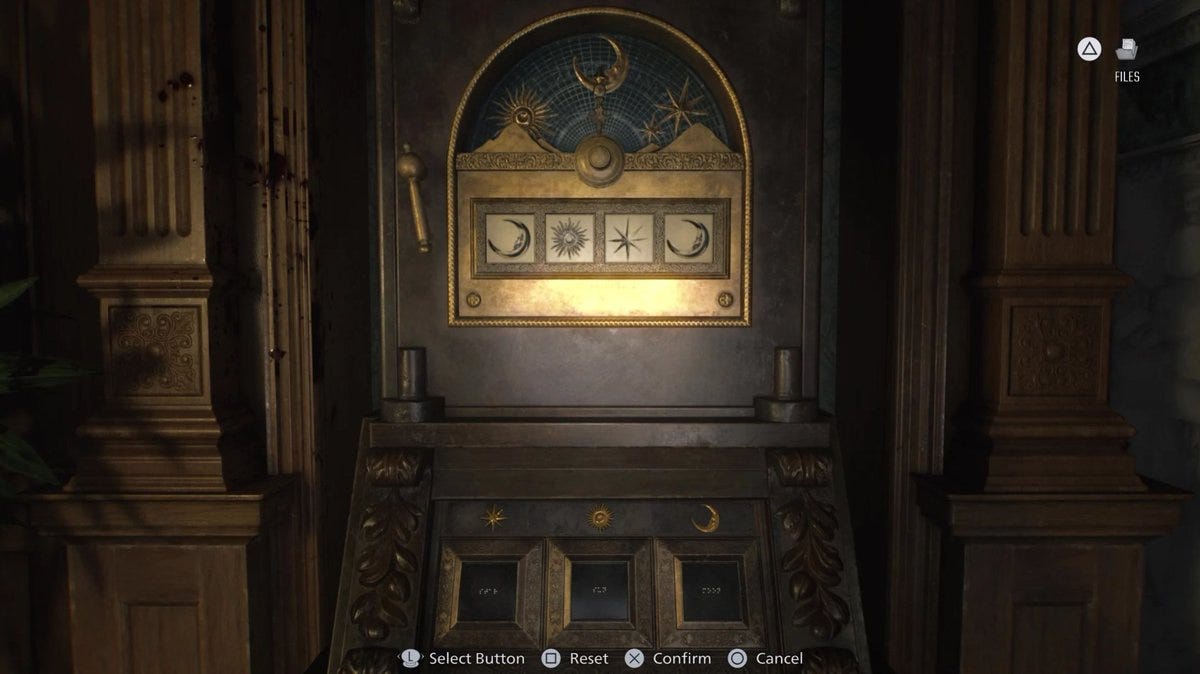
Anyway, I won’t spoil any more of this area, because it’s great, and it makes the game worth playing, frankly. Afterwards, we have another small Leon sequence, and then the above-mentioned basement with the three fuses opening a door. At this point, the fun is more-or-less over. The following few sequences are fine, but after the care center with its personality zombies and beautiful environments, it all feels like a glorified cutscene.
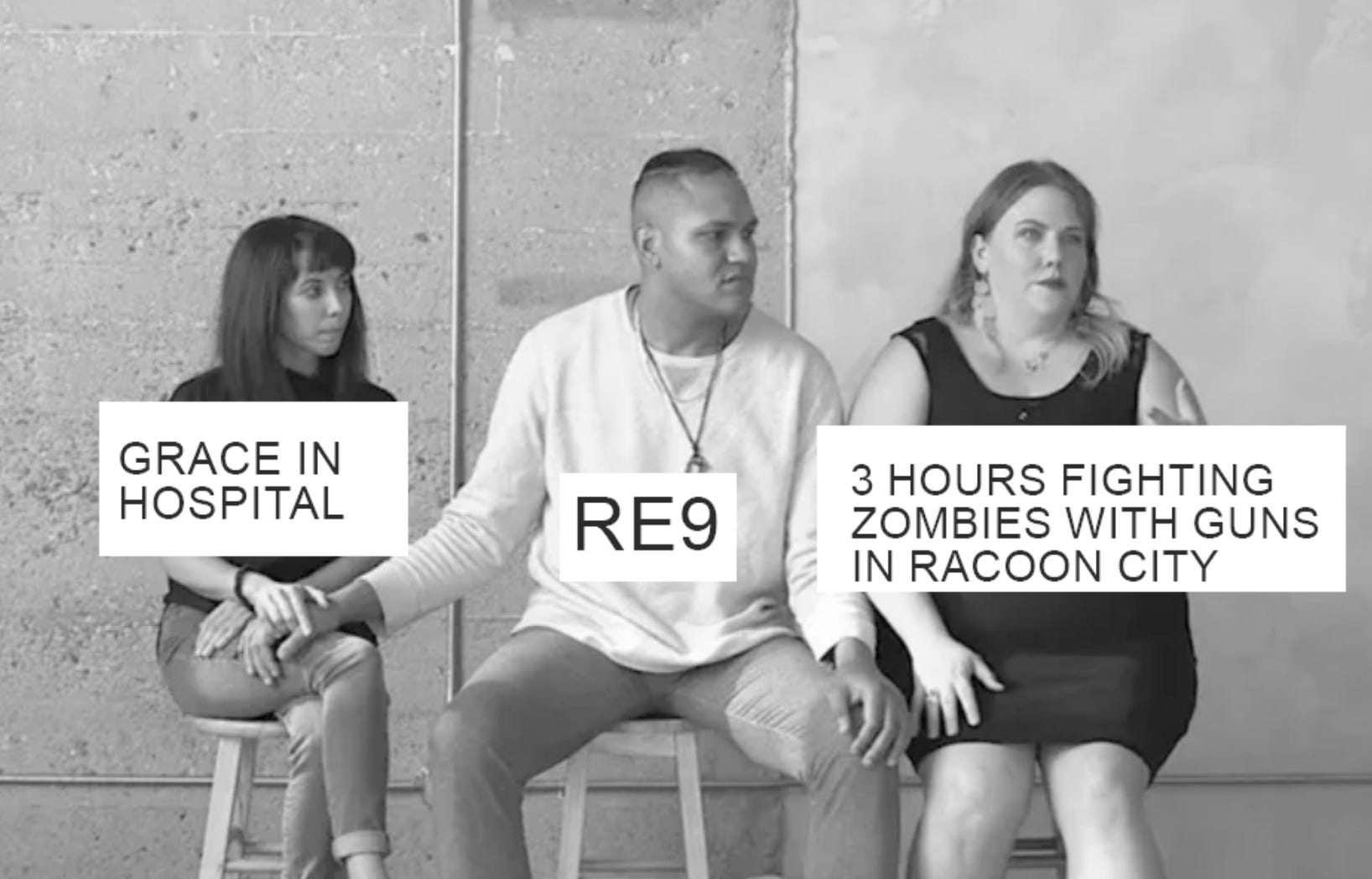
And then we get to Raccoon City, and things get really bleh. Not bad, but so, so dull. The ruins of the city could’ve provided some great material, but instead we have a giant, empty-ish area with three bits of a bomb to find in order to blow up a gate, which Leon could’ve easily gotten around otherwise (this is a bombed-out city after all, but sure, it is a video game and so, three bits must be found).
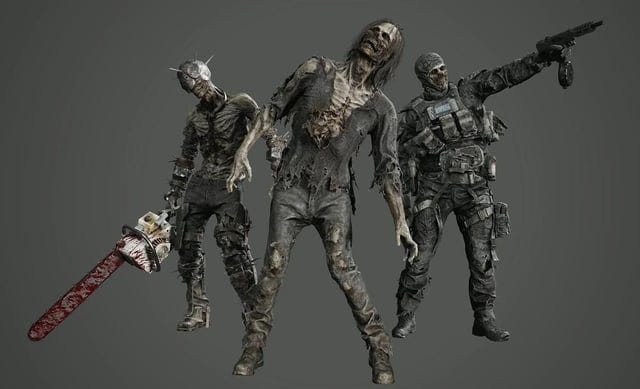
Here, zombies too have personalities, but these personalities are limited to ‘throwing a stick’ (which they endlessly dig out of any terrain), or ‘shooting a gun.’ These fortified Call of Duty zombies mark a real low point in the game, and the whole series. Even with this dumb premise, they could’ve played on the zombie behavior, but for the most part it’s run and gun, and Leon is given an absurd amount of resources (at least on standard difficulty), as well as an unbreakable axe that counters almost anything.
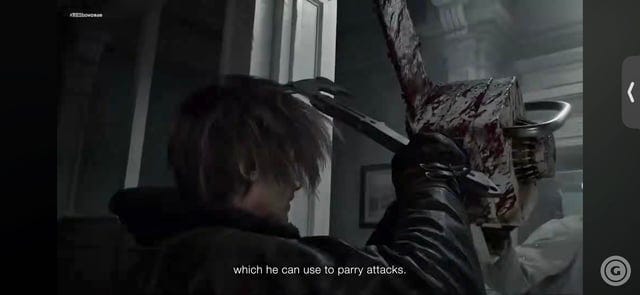
By the way, why did it have to be an axe? The classic RE knife could’ve functioned in the exact same manner. I guess, once again, because it’s sick, and it’s a video game. Anyway, this area is so boring, I don’t even want to remember it, but I think it could’ve easily been cut out, and indeed my conspiracy theory is that it is a chunk from an abandoned open-world RE game. Regardless, our treat for spending hours on blowing up a fence is a bombastic but mechanically bereft chase sequence, which at least is a nice change of pace after all the gunny zombies and beige corridors.
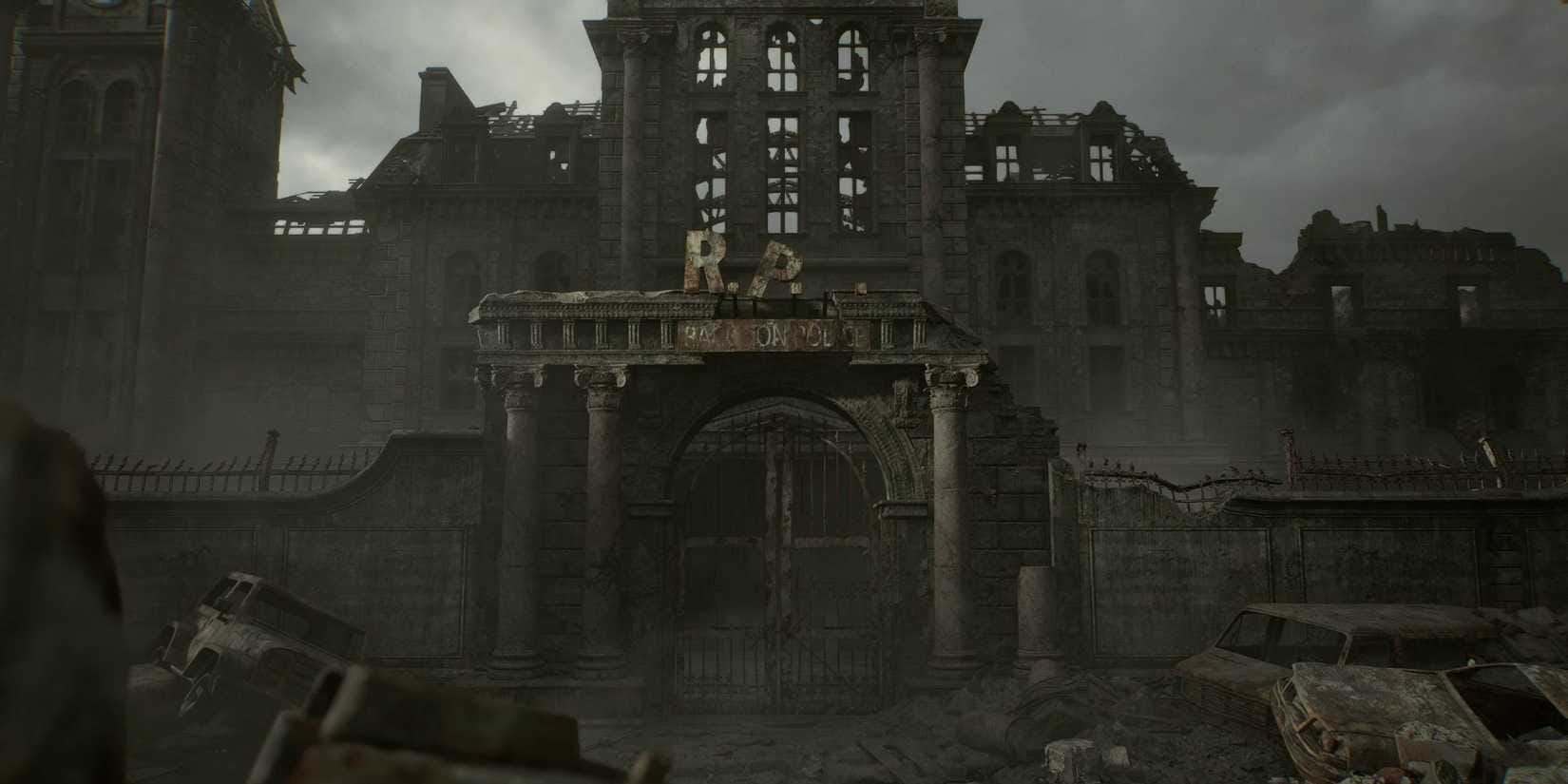
Then we get to visit Raccoon City Police Department, the site of RE2, and it’s a decent nostalgia trip that doesn’t overstay itself. That is however, where the game completely gives up on new ideas, and just feeds you more of that nostalgia for the remaining few hours. We have a dull chase sequence and a dull fight with Mr. X from RE2, or his clone, or something, then probably the worst boss fight in the game—a rematch with the mutant flower from RE1, or its clone, or something.
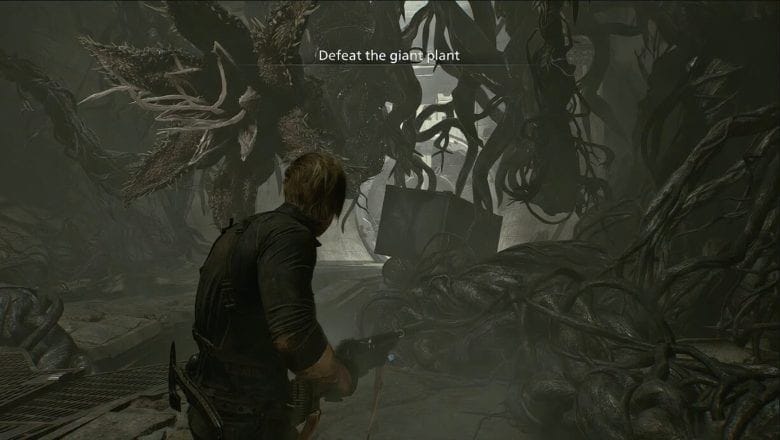
This one is even worse than Mr. X, mechanically, since all you need to do is shoot it in the face and dodge left and right. That’s it. How is it the best they could come up with in 2026? And yes, the game also pops up a message ‘defeat the giant plant,’ as if there was any other option. Also, the auto-saves completely ruin any element of surprise or ambush (in RE3 remake it’s particularly notable), and Leon has access to an infinite-save laptop, while Grace has to use traditional typewriters (although she is of a generation that probably would have no idea how to operate one). And don’t get me started on Leon’s e-store that replaced the merchant from RE4 (I guess they thought they can’t just re-introduce basically the same character yet again after the chubbier version of him in RE8).
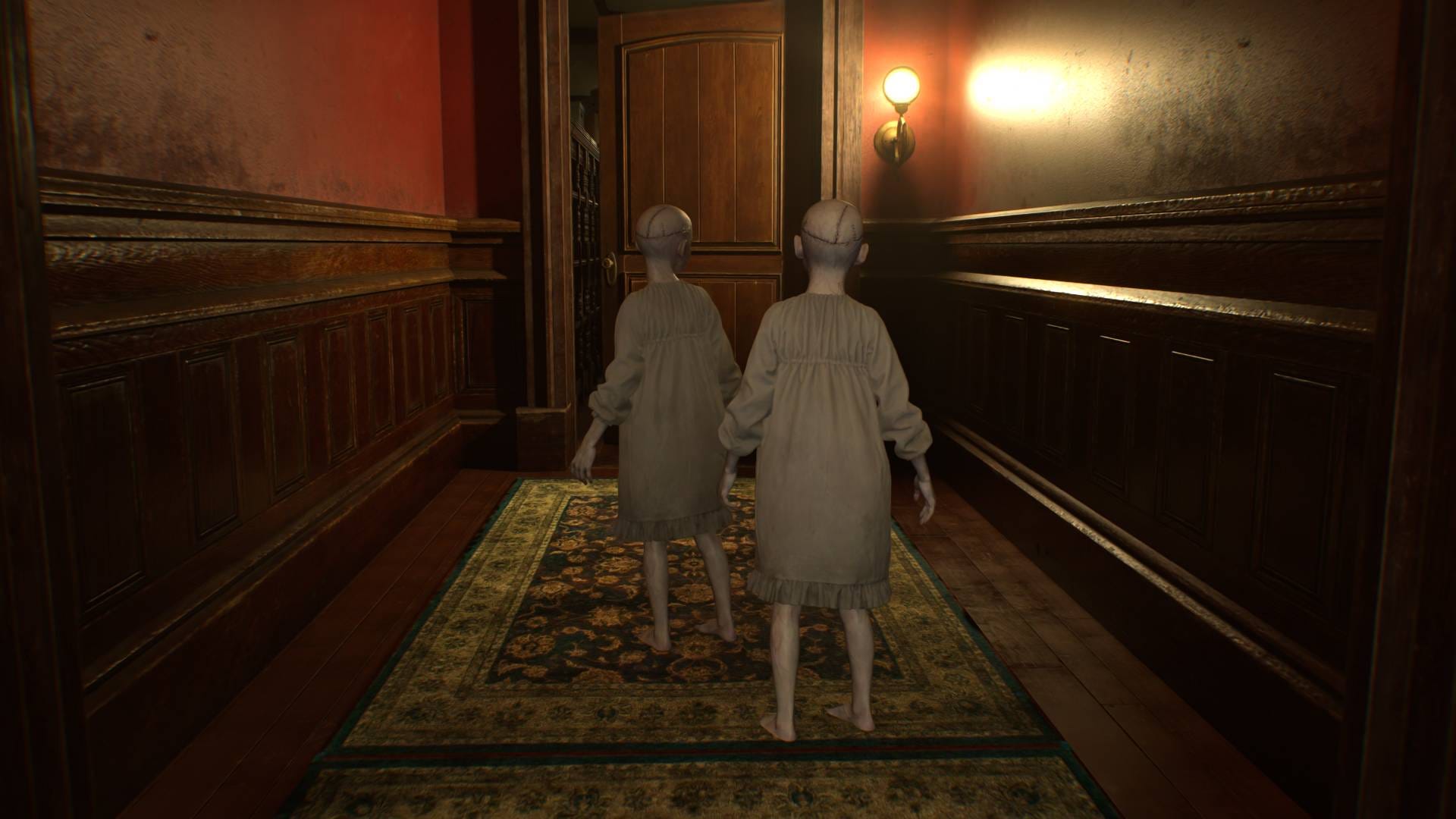
What follows is not much better. Another glorified cutscene in the orphanage which serves no discernible purpose, and makes me feel bad for the environment designers, who did such an outstanding job, only to have us wheeze past all this stuff on wobbly child legs, while solving the most mind-numbingly bland put-thing-into-hole puzzles the game has to offer.
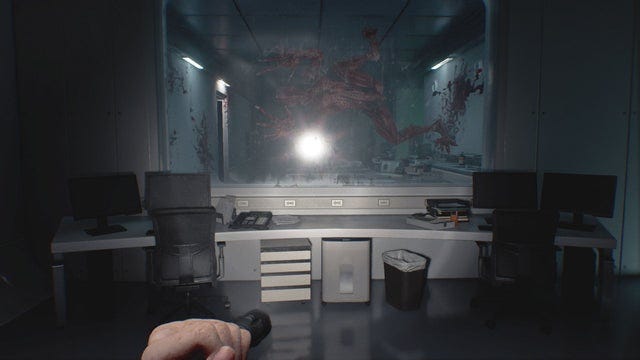
Finally, we get to the inevitable big spooky lab, and again, the art direction here saves the day. Gameplay-wise, it’s nothing new, except now we have to deal with Lickers from RE2 who are exactly as you remember them. There’s a brief section where you can get them to attack some dudes with guns, and that just happens once, and isn’t particularly exciting.
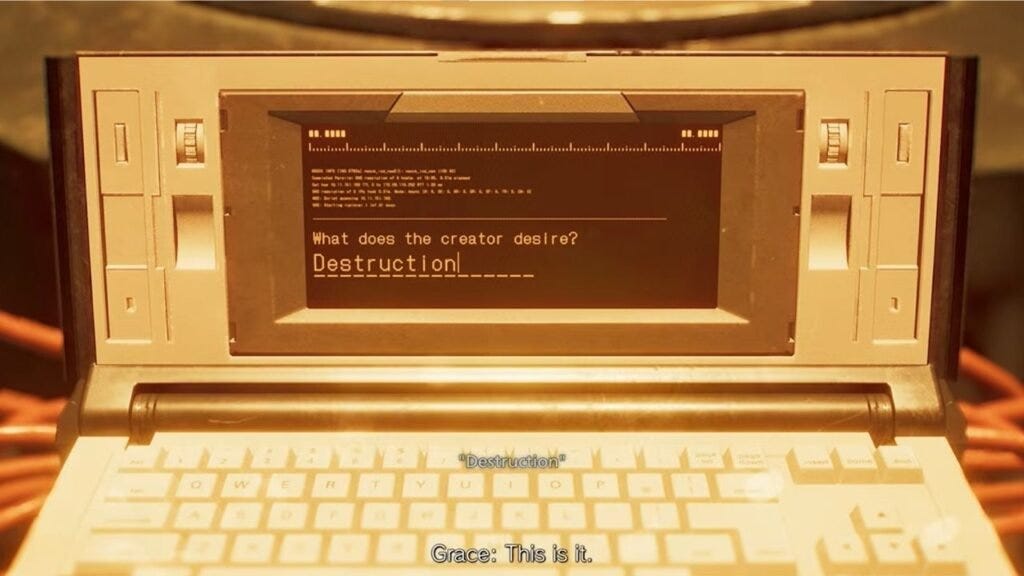
Finally, we get to the choice. Grace must input a code, which has been mentioned explicitly moments before, so I was desperately hoping they might at least let us type it in. Fat chance. It’s a yes or no question between a good ending and a bad ending. Great stuff. The bad ending at least spares us the final boss fight, which is just as dull and predictable as all the others. With that, the game is over, but guess what: the evil is still residing! Oh, and there was a Wesker-at-home style antagonist who is so forgettable I’ve genuinely already forgotten about him until just now.
![I'm sorry, but this is bullshit. [RE9 Ending Spoilers] : r/residentevil](https://substackcdn.com/image/fetch/$s_!JIGk!,f_auto,q_auto:good,fl_progressive:steep/https%3A%2F%2Fsubstack-post-media.s3.amazonaws.com%2Fpublic%2Fimages%2F6efdcd19-2cf0-4127-82e9-d91cf1be37ff_1415x741.jpeg "I'm sorry, but this is bullshit. [RE9 Ending Spoilers] : r/residentevil")
I don’t know, maybe next time they will nail it! Maybe RE9 was a bit of a mutant from various semi-discarded bits, and maybe RE10 will be the real conclusion we’ve all been waiting for. I doubt it, the dumbing down has been going for some time and people seem pretty happy to simp for a hot dad Leon, regardless of what he does in the game. The only thing that can save Capcom is obviously this post (hire me, already).
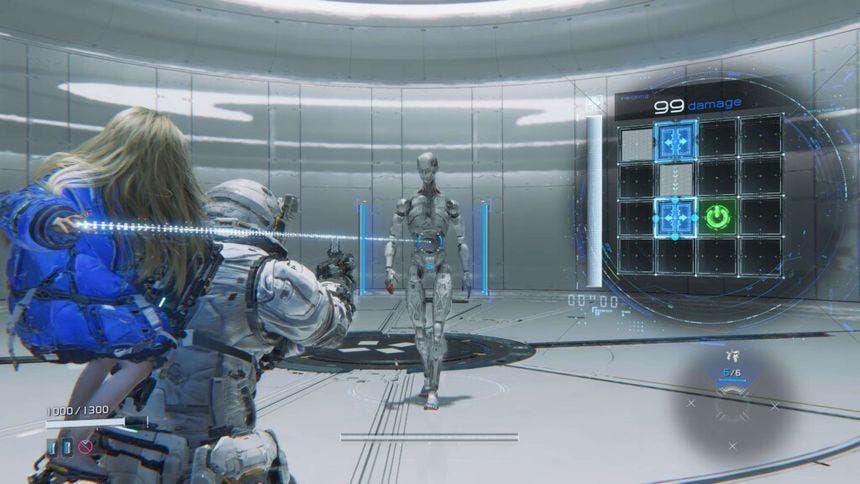
But no, I am cautiously excited for their next game, Pragmata, which feels like a smart mix of old-school mechanics and innovative design choices, and most of all I am appreciative of Capcom’s commitment to pure video-gamey fun. That’s why the RE series endures, and all its many flaws are repeatedly forgiven. Resident Evil is camp in a dumb, straightforward way, without self-aware shrugs and tortured allusions to big themes that could elevate it into the realm of proper art.
Thanks for reading, and I’m now going back to a monthly schedule—too many things in life and work, and I’m not sure why I thought doing it twice a month might be a good idea. I thought it would help with the ol’ engagement, but honestly, I don’t care to put up with Substack’s ecosystem at this point, and I’ll just treat it as a newsletter, which is why I signed up for it in the first place.